Kamarpukur and Jayrambati: A Photographic Journey Then and Now
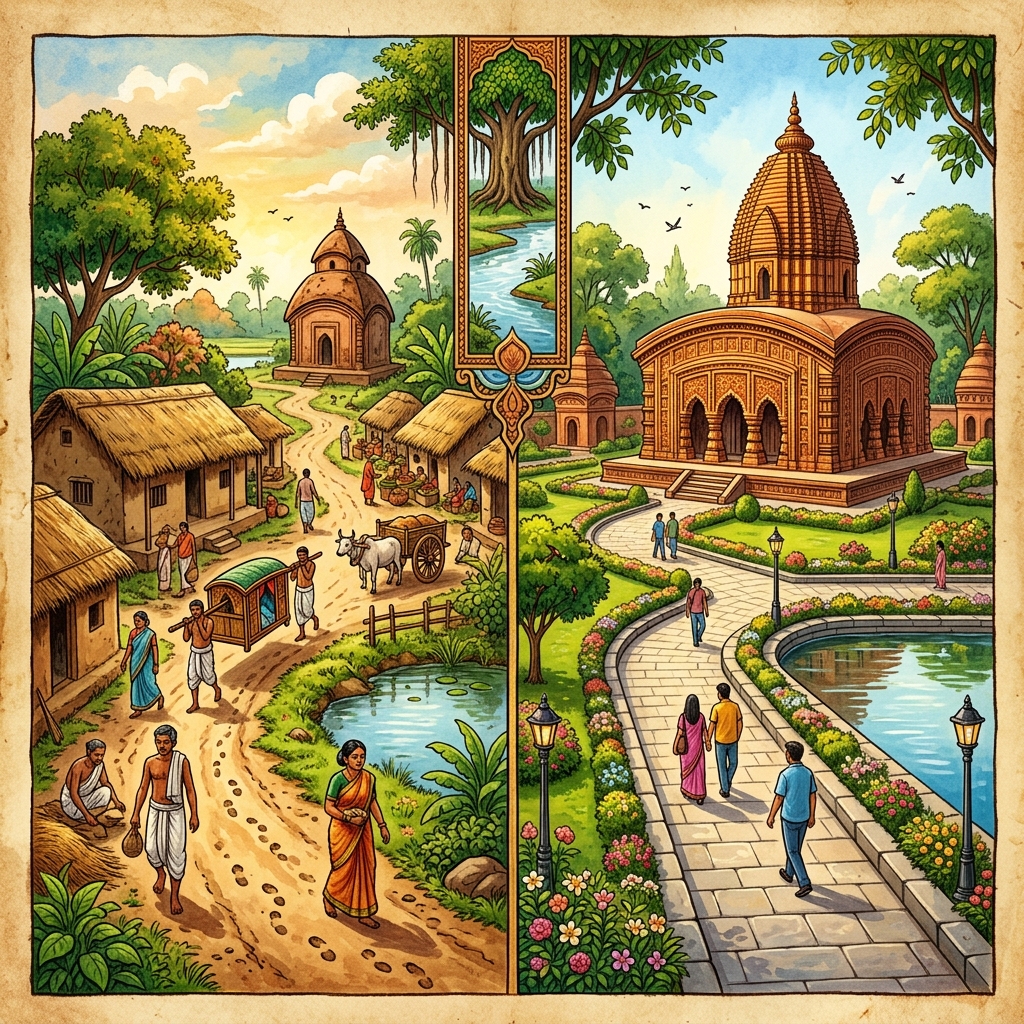
To walk the streets of Kamarpukur and Jayrambati today is to experience a unique blend of modern infrastructure and timeless spiritual peace. However, the landscape that greets today's pilgrim is vastly different from the dense, remote, and difficult-to-access rural Bengal of the mid-19th century.
Let’s take a historical journey to understand how these twin villages evolved from obscurity to becoming major global centers of pilgrimage.
19th Century: The Remote Villages of Gadadhar and Saradamani
In the 1830s, when Sri Ramakrishna (Gadadhar) was born, Kamarpukur was a modest village. While it had a thriving community of artisans, weavers, and farmers, it was completely isolated from the urban development happening in Calcutta (now Kolkata).
- Transportation: There were no paved roads. Travel to Calcutta meant a multi-day journey walking through dense forests, navigating rivers on small boats, and risking encounters with dacoits (bandits).
- Landscape: The area was heavily forested with large mango orchards, vast paddy fields, and numerous large ponds (like the Haldarpukur) that served as the primary water source.
- Jayrambati: Just a few miles away, Jayrambati was even more remote and rustic, characterized by mud houses with thatched roofs and simple agrarian life.
Early 20th Century: The Beginning of the Pilgrimage
Following the passing of Sri Ramakrishna (1886) and later Sri Sarada Devi (1920), the direct disciples and early followers began visiting the villages. Swami Vivekananda himself visited Kamarpukur to pay homage.
During this era, reaching the villages was still a challenge. Pilgrims would take a train as far as Tarakeswar or Bishnupur, and then rely on bullock carts or walk for miles along dusty, unpaved village tracks. Despite the hardship, the spiritual magnetism drew devotees from all over India.
The Ramakrishna Math eventually acquired the ancestral homes in both villages to preserve them as sacred monuments.
Mid to Late 20th Century: Developing the Mission Centers
The landscape began to shift dramatically with the formal establishment of the Ramakrishna Math and Mission centers.
- Kamarpukur Temple (1951): The beautiful marble temple of Sri Ramakrishna was built right over the exact spot of his birth. The simple mud hut was preserved, but the surrounding area was developed with guest houses, a library, and a massive school complex.
- Matri Mandir, Jayrambati (1923/1954): A temple was built over the birthplace of the Holy Mother. The surrounding village saw the addition of a charitable dispensary, educational institutions, and improved roads connecting it to Kamarpukur.
Kamarpukur and Jayrambati Today
Today, the transformation is staggering, yet the spiritual essence remains untouched.
The "Now":
- Connectivity: Smooth state highways connect Kolkata directly to Kamarpukur. Air-conditioned buses and personal vehicles cover the distance in a few hours. A nearby railway station at Goghat has made train travel incredibly easy.
- Infrastructure: The dusty tracks have been replaced by paved roads lined with solar lights, e-rickshaws (Totos), and local shops catering to thousands of tourists.
- Preservation: Despite the modernization, the Ramakrishna Mission has impeccably maintained the core heritage sites. The original mud huts, the Haldarpukur, and the sacred trees look much as they did a century ago, offering an oasis of calm.
A Living History
The journey from a remote 19th-century hamlet to a 21st-century spiritual hub is a testament to the enduring power of Sri Ramakrishna and Sri Sarada Devi's legacy. As you walk from the modern Yatri Nivas to the ancient mud walls of their ancestral homes, you are literally walking across centuries of history.
Experience the History Firsthand
See the preserved ancestral homes and modern temples. Plan your trip to these historic twin villages.