Belur Math: The History and Significance of Swami Vivekananda's Masterpiece
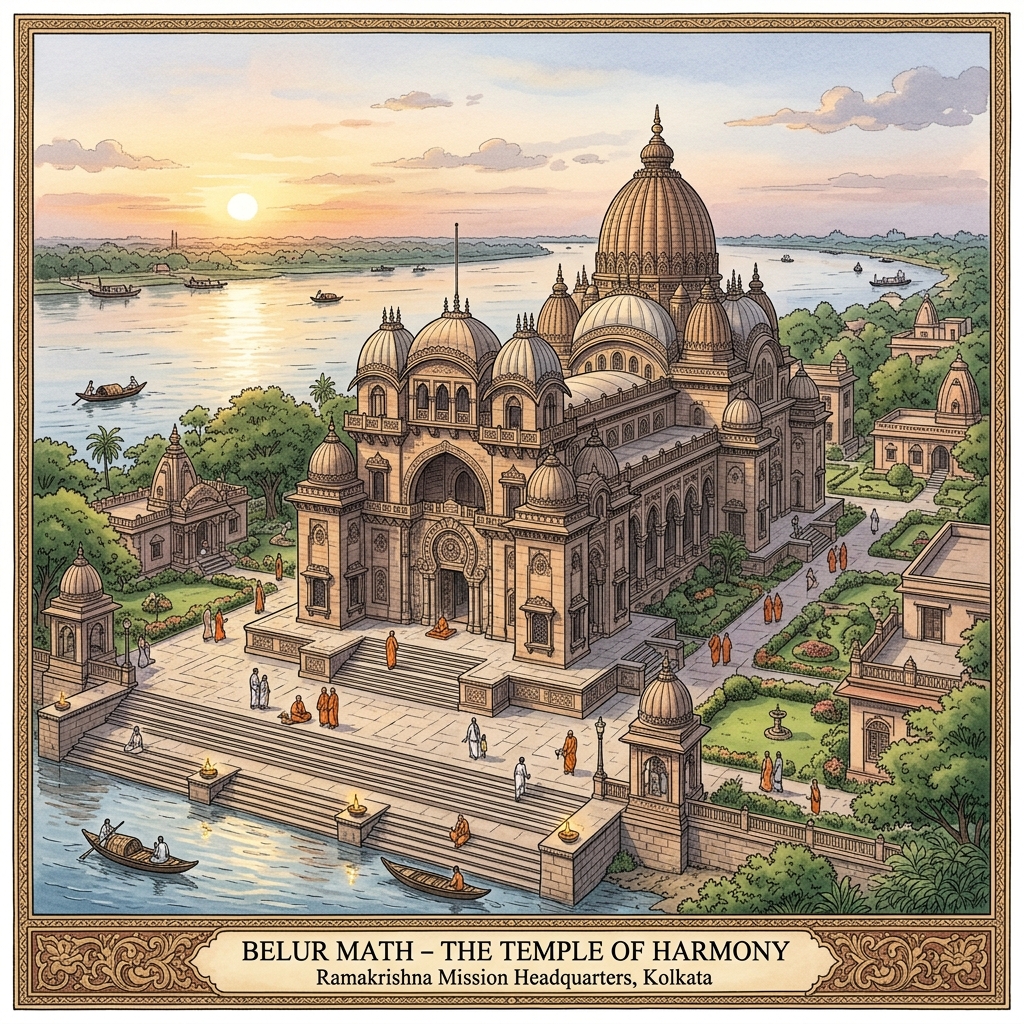
Located on the serene western banks of the Hooghly River (Ganges) in Howrah, West Bengal, Belur Math is much more than a beautiful temple complex. It is the global headquarters of the Ramakrishna Math and Mission, and the crowning architectural and organizational achievement of Swami Vivekananda.
Sprawling over 40 acres of lush green lawns and palm trees, the Math stands as a living monument to the harmony of religions and the ideal of selfless service.
The Founding of Belur Math (1899)
Following the passing of Sri Ramakrishna in 1886, his young monastic disciples lived in extreme poverty at the Baranagar Math, and later at Alambazar. They desperately needed a permanent home to preserve the Master's relics and to serve as a training center for future monks.
After Swami Vivekananda returned from his triumphant tour of the West, he acquired a large plot of land in Belur in 1898. Early the next year, in January 1899, the Math was formally relocated to this new site. Vivekananda personally carried the urn containing Sri Ramakrishna’s sacred ashes on his right shoulder to the new grounds, stating that the Master would reside there eternally.
The Symphony in Stone: The Main Temple
While Swami Vivekananda did not live to see the completion of the main Sri Ramakrishna Temple (which was consecrated in 1938), he was the primary visionary behind its breathtaking architecture.
During his travels across India and the globe, Vivekananda meticulously observed various architectural styles. He envisioned a temple that would symbolize his Master’s core teaching: the underlying unity of all religions. The architect, Swami Vijnanananda (a brother disciple and a civil engineer), executed Vivekananda’s vision brilliantly.
A Blend of Global Architecture
- Hindu Elements: The main structure resembles a traditional South Indian temple from the outside, while the domes echo the Rajput and Mughal styles. The entrance gate is inspired by Buddhist stupas (like Sanchi).
- Islamic Elements: The balconies and windows carry the elegant touch of Islamic architecture found in Rajputana.
- Christian Elements: When you step inside the massive prayer hall, the long nave, high ceiling, and pillars instantly evoke the atmosphere of a grand European Renaissance cathedral.
From different angles, the temple looks like a church, a mosque, or a Hindu temple—a literal "symphony in stone."
The Significance of the Math
Belur Math is unique because it is not just a place of ritualistic worship. It is the beating heart of a massive global network.
- The Training Ground: It is the primary training center where young men are ordained into the monastic order of the Ramakrishna Math.
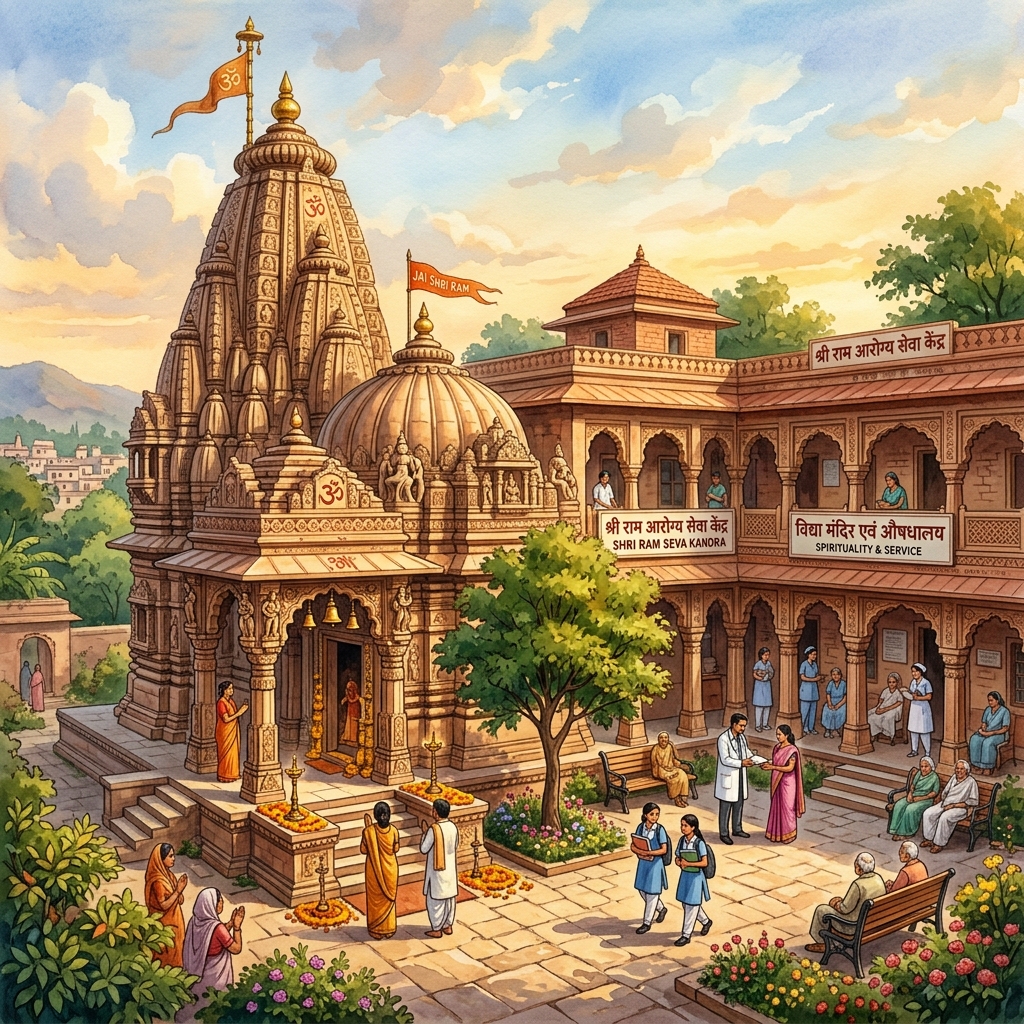
- The Center of Service: From here, the massive philanthropic activities—schools, hospitals, and disaster relief operations—are coordinated worldwide.
- Sacred Shrines: Apart from the main temple, the complex houses the beautiful temples of Sri Sarada Devi, Swami Vivekananda (built on the exact spot he was cremated), and Swami Brahmananda.
Connect the Journey
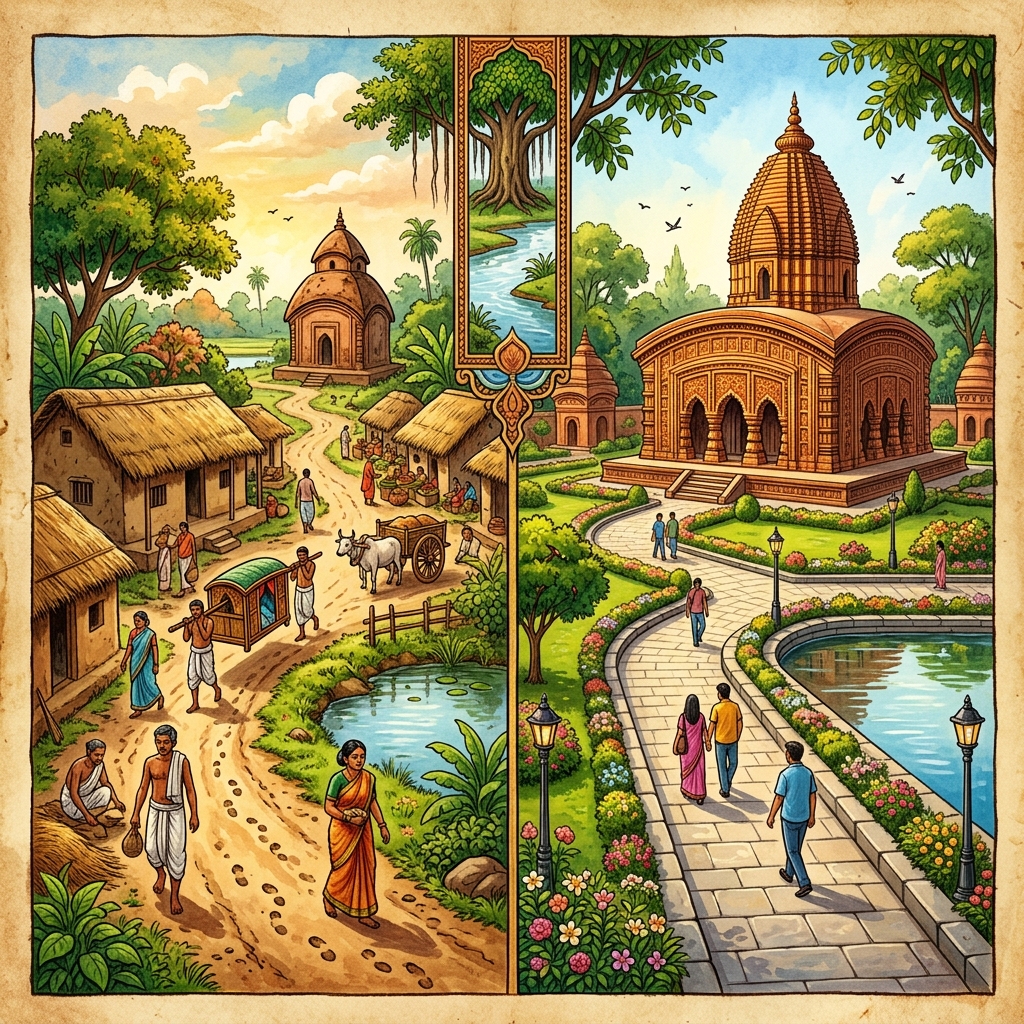
The massive institution of Belur Math originated from the quiet village of Kamarpukur. A complete pilgrimage involves visiting both.