Swami Vivekananda: Early Life and Education
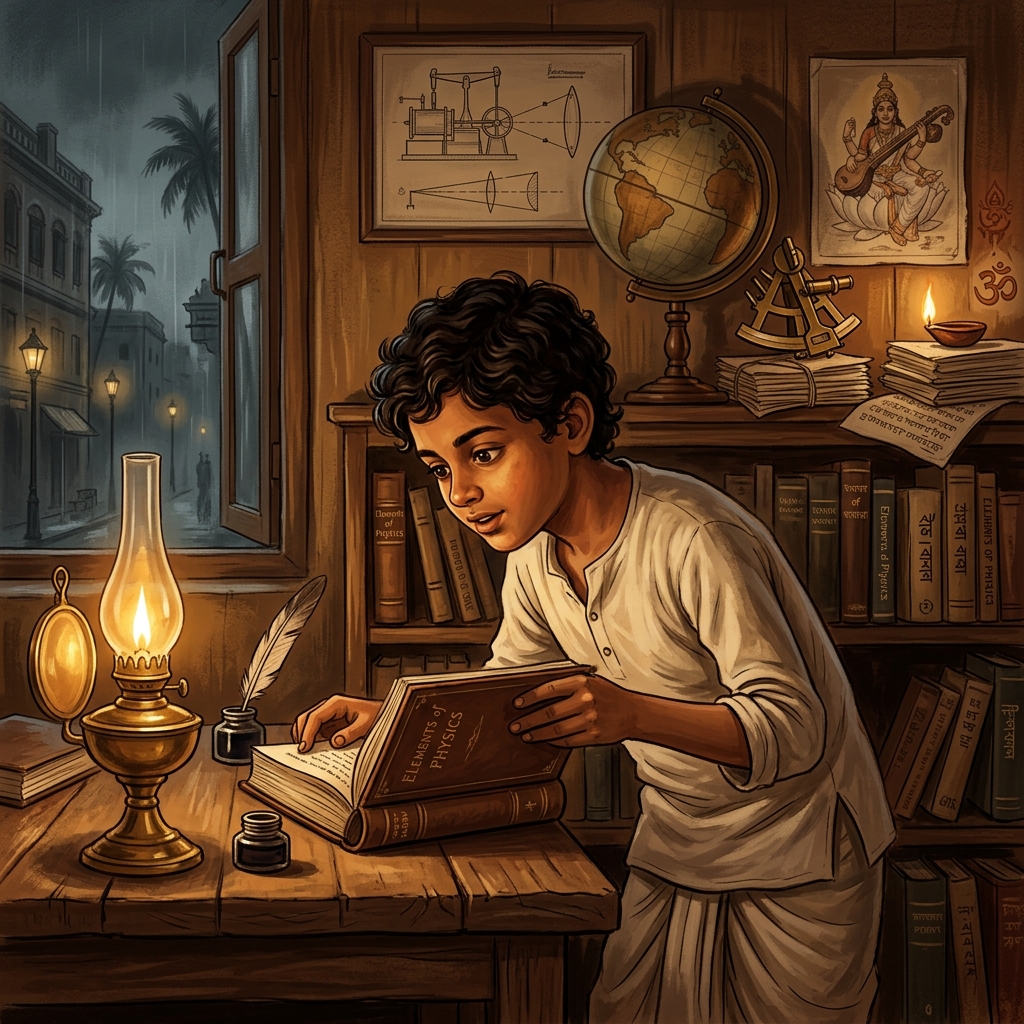
Long before he became the global icon of Vedanta and the founder of the Ramakrishna Mission, Swami Vivekananda was a brilliant, energetic boy named Narendranath Datta. His early life and education played a critical role in shaping the towering intellect and fierce compassion he would later display.
Birth and Family Background
Narendranath Datta was born on January 12, 1863, during the Makar Sankranti festival, into an aristocratic Bengali Kayastha family in Calcutta (now Kolkata). His father, Vishwanath Datta, was a successful attorney at the Calcutta High Court. Vishwanath was known for his progressive, rational mind and his vast knowledge of Persian and English literature.
His mother, Bhuvaneshwari Devi, was a deeply pious woman. Narendranath inherited his sharp intellect and rational thinking from his father, and his deep spiritual inclination and compassion from his mother.
Childhood: The Energetic 'Bileh'
As a young boy, affectionately called 'Bileh', Narendra was incredibly energetic and restless. He was fascinated by wandering monks and ascetics who visited his neighborhood. He possessed an innate spiritual bent, often meditating before the images of deities like Shiva and Rama.
However, he was not a quiet child. He was mischievous and full of boundless energy, often leading his friends in games and adventures. He was also highly observant and questioned everything, a trait that would define his later spiritual journey.
A Brilliant Student
Narendra's formal education began at the age of eight at the Metropolitan Institution. In 1879, he passed the entrance examination for Presidency College, Calcutta, and briefly studied there before transferring to the General Assembly's Institution (now known as Scottish Church College).
His academic brilliance was undisputed. He possessed what we would now call a photographic memory. He devoured books across a vast spectrum of subjects:
- Western Philosophy: He studied the works of David Hume, Immanuel Kant, Johann Gottlieb Fichte, Baruch Spinoza, Arthur Schopenhauer, Auguste Comte, John Stuart Mill, and Charles Darwin.
- History and Science: He was deeply interested in European history, logic, and scientific advancements.
- Literature: He had a great command over both English and Bengali literature.
Herbert Spencer's theory of evolution deeply influenced him, and he even corresponded with the philosopher, translating Spencer's book *Education* into Bengali.
The Clash of Faith and Reason
This extensive exposure to Western empirical philosophy and science created a massive inner conflict for Narendra. His rational mind could no longer accept blind religious faith. He joined the Brahmo Samaj, a reformist Hindu movement led by Keshab Chandra Sen, which rejected idol worship and emphasized a formless God.
However, the intellectual discussions of the Brahmo Samaj could not satisfy his soul. He wanted direct, experiential proof of God's existence. This intense, agonizing search for truth eventually led him away from the classrooms of Calcutta to the temple courtyard of Dakshineswar, where he met his destiny: Sri Ramakrishna.
Discover the Roots of the Mission
The Ramakrishna Mission, born from Vivekananda's vision, runs excellent educational institutions today, keeping his legacy alive.