Swami Vivekananda's Teachings on Education: Character Building Above All
Despite passing away at the young age of 39, Swami Vivekananda left an indelible mark on almost every aspect of Indian society, most notably in the field of education. His views were radical for his time and remain incredibly relevant in today's era of information overload.
"Education is the manifestation of the perfection already in man."
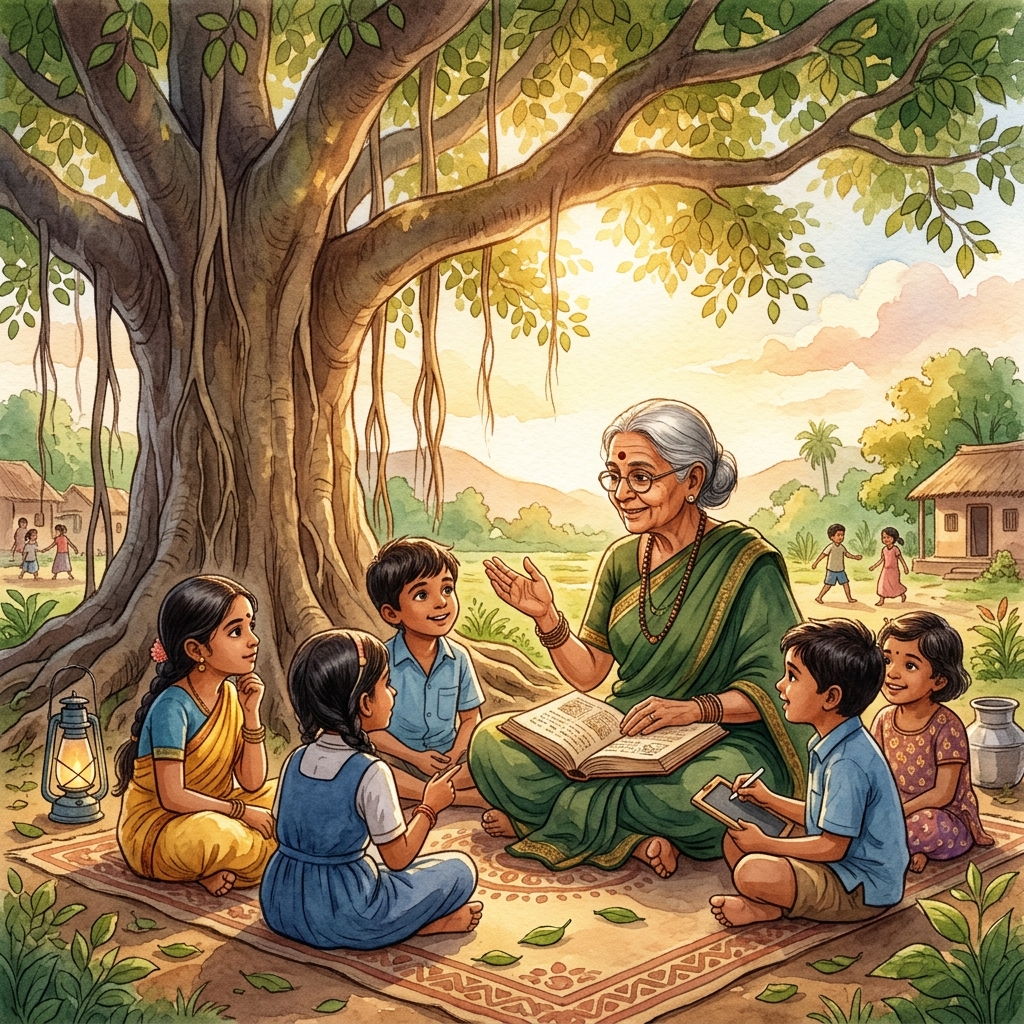
This single sentence forms the bedrock of Vivekananda's educational philosophy. He vehemently opposed the idea that a student's mind is an empty vessel waiting to be filled with facts by a teacher.
According to Vedanta, every human being possesses infinite knowledge and power deep within their soul. The role of education is merely to remove the obstacles—the veil of ignorance—so that this inner perfection can manifest. A teacher is simply a guide who helps the student discover the knowledge that is already inside them, much like a gardener who nurtures a seed so it can grow according to its own nature.
Information vs. Assimilation
Swami Vivekananda was highly critical of the rote-learning system established by the British colonial administration, which focused on mass-producing clerks. He argued that stuffing the brain with facts does not constitute true education.
"If education is identical with information, the libraries are the greatest sages in the world, and encyclopedias are the Rishis," he famously mocked.
True education, he believed, requires assimilation of ideas. If a person grasps five life-changing ideas and assimilates them into their character, they are far more educated than someone who has memorized an entire library but has not built a strong character.
Man-Making and Character Building
For Vivekananda, the ultimate goal of education was "man-making." He wanted an education system that built immense strength of character, willpower, and self-confidence.
- Physical Strength: He believed a strong mind requires a strong body. He told the youth that they would be nearer to heaven by playing football than by reading the Gita.
- Concentration: He saw the power of concentration as the only true method of acquiring knowledge. Whether it is a scientist in a lab or a yogi in meditation, the ability to focus the mind is the key to success.
- Fearlessness: True education should banish fear and instill a profound sense of self-belief (Shraddha).
The Legacy in Action: Ramakrishna Mission Schools
Swami Vivekananda's vision did not remain theoretical. Today, the Ramakrishna Mission operates thousands of educational institutions across India, ranging from remote village schools to prestigious degree colleges.
In places like Kamarpukur, the Ramakrishna Mission schools actively implement these ideals. Alongside the standard academic curriculum, tremendous emphasis is placed on moral education, discipline, sports, and spiritual values, striving to create well-rounded individuals who live for others.
See Vivekananda's Vision in Kamarpukur
The Ramakrishna Mission schools in Kamarpukur are a living example of this educational philosophy. Support or visit their rural development initiatives.