What did Swami Vivekananda Learn from Sri Ramakrishna?

Swami Vivekananda possessed a towering intellect, a formidable education in Western philosophy, and an undeniable natural charisma. Yet, without Sri Ramakrishna, Narendranath Datta might have remained an affluent Calcutta lawyer or a brilliant but restless academic. Sri Ramakrishna was the alchemist who turned the raw metal of Narendra into the pure gold of Vivekananda.
What were the specific, life-altering lessons that the highly educated disciple learned from the seemingly unlettered saint of Kamarpukur?
1. God is a Tangible Reality, Not a Theory
Before meeting his Master, Narendra’s knowledge of God was purely intellectual. He debated the existence of a creator using logic and philosophy. From Sri Ramakrishna, he learned that God is not a subject of debate, but a reality to be directly experienced.
When Sri Ramakrishna stated, "I see God as clearly as I see you," it shattered Narendra's intellectual arrogance. From his Master, he learned the necessity of direct spiritual realization (Anubhuti) over mere theological speculation.
2. The Harmony of Religions (Yato Mat, Tato Path)
Narendra lived in an era of intense religious sectarianism. Sri Ramakrishna, having practiced Hinduism, Islam, and Christianity, and having reached the same spiritual pinnacle through all of them, taught a radical truth: As many faiths, so many paths.
Vivekananda learned that religions are not contradictory, but complementary. This specific teaching was the foundation of his historic 1893 speech in Chicago, where he proudly declared to the West that he belonged to a religion that taught the world universal acceptance.
3. "Jiva is Shiva": Service to Man is Service to God
This is perhaps the most consequential lesson Vivekananda learned, one that literally changed the course of modern Indian history.
One day at Dakshineswar, Sri Ramakrishna was discussing the Vaishnava ideal of showing "compassion to all beings." Suddenly, the Master went into a deep spiritual state. When he returned, he remarked, "Compassion to beings? Who are you, a tiny creature, to show compassion? No, no! It is not compassion to others, but rather service to man, recognizing him to be a veritable manifestation of God (Shiva)."
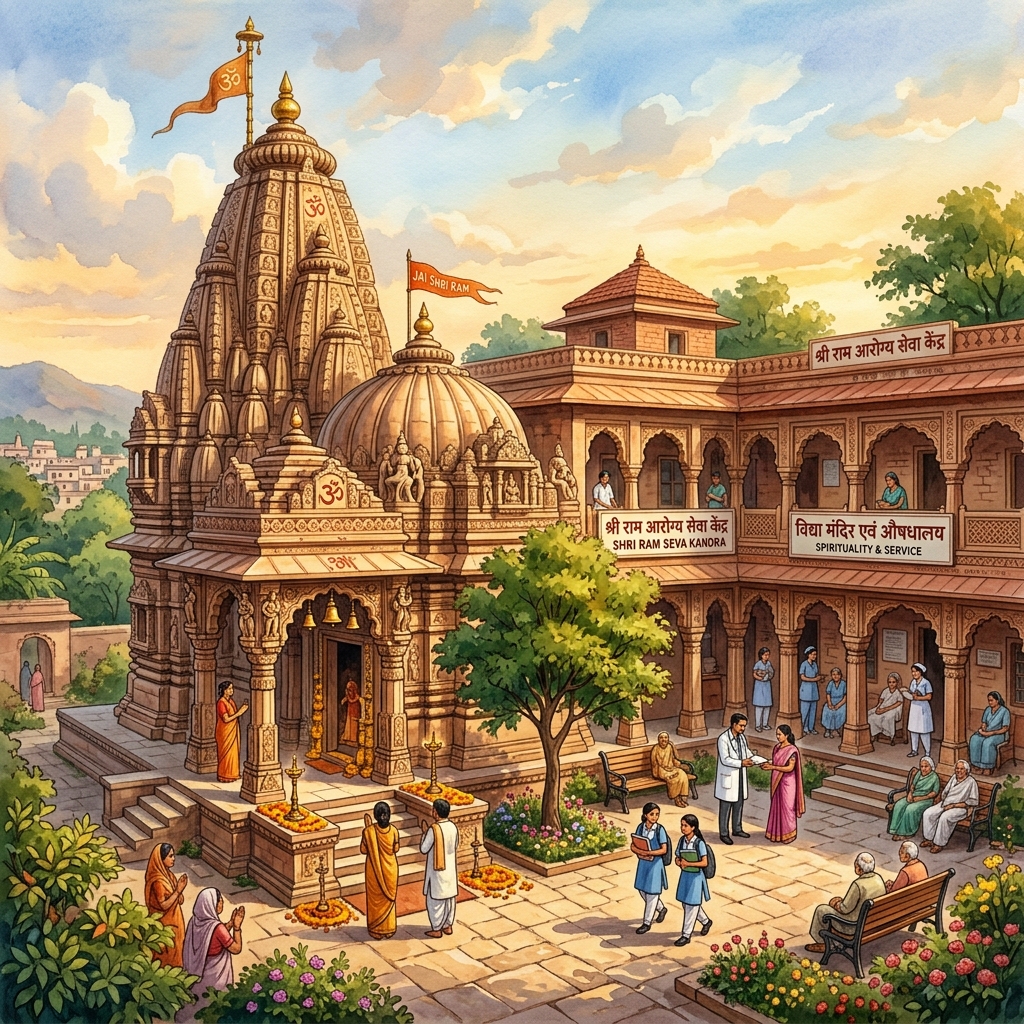
Most disciples present did not grasp the gravity of this statement, but Narendra was profoundly struck. He realized that true spirituality did not require abandoning the world for a Himalayan cave. Instead, one could achieve the highest spiritual state by serving the poor, the sick, and the uneducated, treating them as living Gods. This lesson became the absolute core motto of the Ramakrishna Mission.
4. The Power of Unconditional Love
Narendra was a fiercely independent rebel who fought with everyone, including his Master. He rejected Sri Ramakrishna's visions and argued against idol worship. Yet, Sri Ramakrishna never tried to force or discipline him. Instead, he bound Narendra with a love so pure and unconditional that it was impossible to break away.
Vivekananda learned that true transformation of the human heart happens not through logic or argument, but through infinite, selfless love.
Trace the Origin of these Teachings
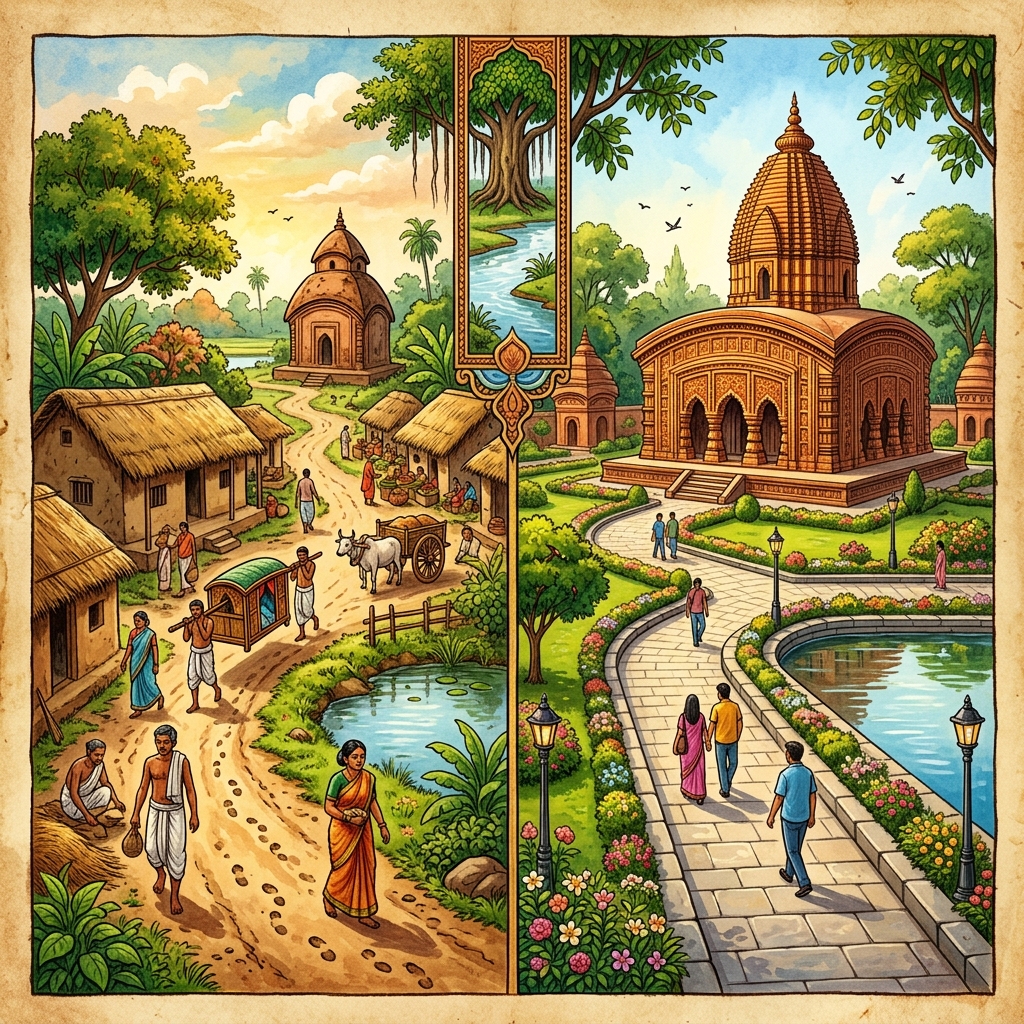
The pure wisdom that transformed Vivekananda originated in the simple village of Kamarpukur. Discover the birthplace of Sri Ramakrishna.